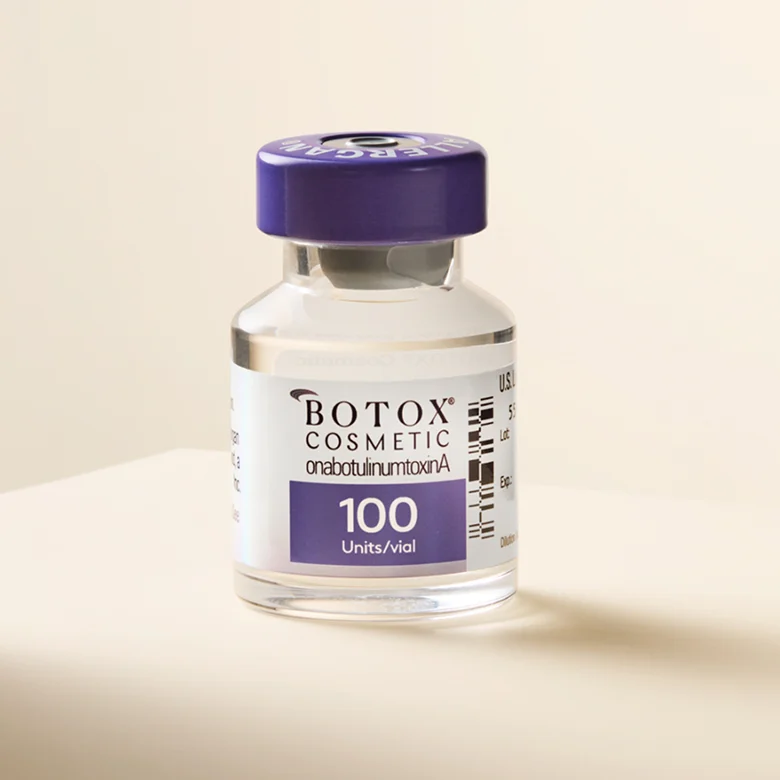
PLATYSMA BANDS

The first and only.1-6

BOTOX® Cosmetic is FDA approved for the temporary improvement in the appearance of moderate to severe platysma bands in adults.1-6

Real BOTOX® Cosmetic patient.
Treated for the appearance of moderate to severe platysma bands. Results may vary.

Shine a light on the neck and lower face.

70M+

consumers (70.6M) say they are very or extremely bothered by a lower face issue,* including platysma bands that may impact jawline definition.7,†

48M+

consumers (48.2M) say they are willing to address a lower face issue,* including platysma bands that may impact jawline definition.7,†

1.6x

more

patients with prior neurotoxin treatment are  more likely to consider treating their platysma bands than those with no prior neurotoxin treatment.8,‡

*Lower face includes: multiple area and signs, including cord-like bands that run up and down from the jawline to lower neck (platysma), etc.7
†According to 2022 US Census Projections of men and women (N = 239.3M) extrapolated from a survey of 15,295 consumers. Sample was weighted by gender, age/generation, and race/ethnicity post data cleaning to match census.7
‡According to a 2021 online, self-administered survey of 450 women ages 21 to 69 with moderate to severe platysma bands across 7 countries.8

Understanding the
platysma muscle.

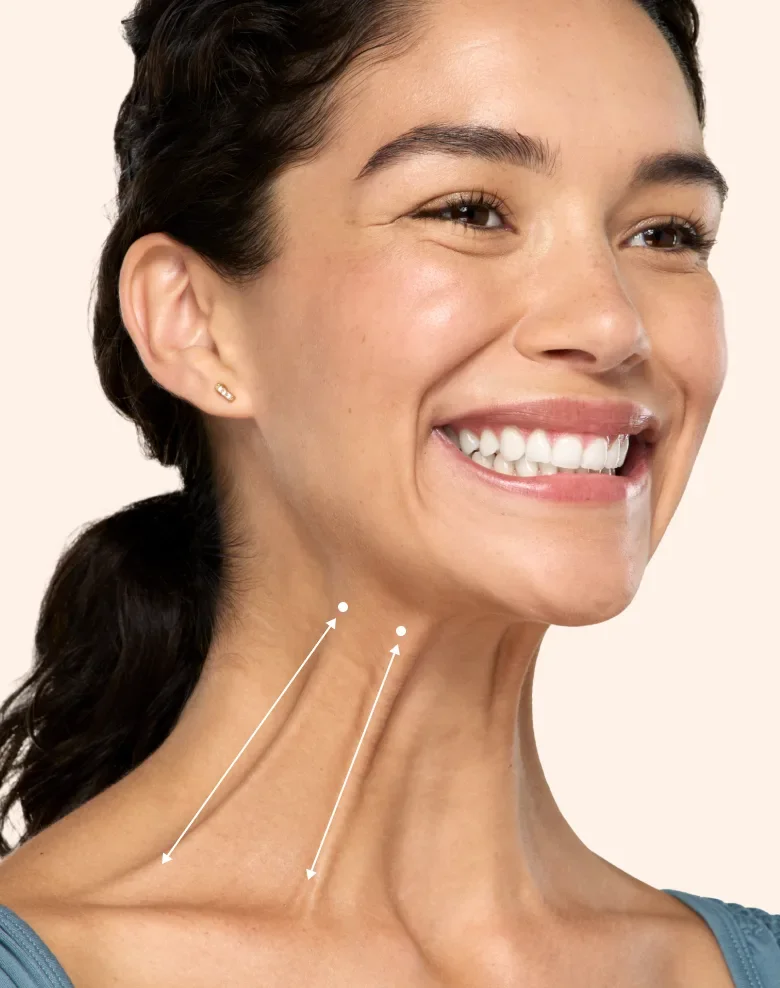
Repetitive movements over time can cause visible changes in the platysma muscle, including the appearance of prominent platysma bands that can also impact the definition in the jawline.7 The platysma muscle allows for bidirectional contraction. The superior (upper) part of the platysma muscle is involved in facial expression. The inferior (lower) part of the platysma muscle pulls the skin of the upper neck. Repeated use of the platysma muscle can be associated with the appearance of moderate to severe bands on the neck, downward pull in the lower face, including the corners of the mouth, and middle and lower face descent, including the jowls.9-12

The platysma muscle9-11:

  • Is a depressor muscle (pulling down on the soft tissue layers of the lower face and neck)
  • Is extremely thin and superficial
  • Covers most of the anterior and lateral neck, integrating
with the lower facial muscles and descends all the way to
the clavicle

Real patient before treatment.

The one & only FDA-approved neurotoxin
to establish a proprietary dosing protocol for the
treatment of moderate to severe platysma bands1-6

Customizable dosing for platysma bands

BOTOX® Cosmetic is the one & only to pioneer customizable dosing that is FDA approved to meet the individual needs of your patients.1-6

Depending on the severity of the platysma bands1:


  • 26 Units if 1 band is injected on each side
  • 31 Units if 1 band is injected on one side and
2 bands are injected on the other side
  • 36 Units if 2 bands are injected on each side

Real BOTOX® Cosmetic patient.

Treated for the appearance of moderate to severe platysma bands. Results may vary.

Injecting

  • For each vertical platysma bands identified, 1 to 2 per side, distribute 5 injections vertically approximately 1 to 2 cm apart; ensure the most superior injection site is approximately 1 to 2 cm inferior to the jawline injections1
  • For each side, administer 4 jawline injections to the upper platysma muscle approximately 1 to 2 cm inferior and parallel to the lower mandibular border; ensure the anterior injection site is in line with the oral commissure, and the posterior injection is slightly anterior to the angle of the mandible1
  • Administer the remaining 2 injections equidistant (approximately 1 to 2 cm apart) between the anterior and posterior injection points1

Follow the 8/5 Rule1

circle as list bullet 8 UNITS IN THE JAWLINE PER SIDE

  • 2 Units/0.05 mL into 4 sites on each side
  • 16 Units in 8 sites total

+

circle as list bullet 5 UNITS PER PLATYSMA BAND

  • 1 Unit/0.025 mL into 5 sites per band on each side
  • 10 to 20 Units in 10 to 20 sites total (1 to 2 bands per side)

=

TOTAL DOSING

  • 26 Units if 1 band is injected on each side
  • 31 Units if 1 band is injected on one side and 2 bands are injected on the other side
  • 36 Units if 2 bands are injected on each side

Reconstitution

BOTOX® Cosmetic dilution and reconstitution processes are the same for moderate to severe platysma bands, forehead lines, lateral canthal lines, and glabellar lines (1.25 mL diluent for 50 Units and 2.5 mL diluent for 100 Units).1

No two neurotoxins are
the same.

Just like no two fingerprints are the same.

Botulinum toxins are not equivalent. Unique manufacturing and formulations result in differences; therefore, units of BOTOX® Cosmetic cannot be compared or converted into units of other products.1

Even elements that may be similarly characterized are unique in the details, creating the complex “fingerprint” of the final product.

Incomparable characteristics might include the specific units approved for injection in the same area, the precise injection sites and depths, the duration of effect, and the diffusion profile of the neurotoxin.1,13

Make sure to conduct a
full face, lower face, and
neck assessment to
determine appropriate
patients for treatment.

01

Dosing and Injection Guide

02

Patient Brochure

03

Allergan Medical Institute®

Visit AllerganMedicalInstitute.com for access to training resources.

Social Media and Website Materials

Download resources, promotions, and campaign assets for your practice and your patients.

BOTOX® Cosmetic IMPORTANT SAFETY INFORMATION, INCLUDING BOXED WARNING

BOTOX® Cosmetic (onabotulinumtoxinA) Important Information

Indications

BOTOX® Cosmetic (onabotulinumtoxinA) is indicated in adult patients for the temporary improvement in the appearance of:

- Moderate to severe glabellar lines associated with corrugator and/or procerus muscle activity

- Moderate to severe lateral canthal lines associated with orbicularis oculi activity

- Moderate to severe forehead lines associated with frontalis activity

- Moderate to severe platysma bands associated with platysma muscle activity


BOTOX® Cosmetic IMPORTANT SAFETY INFORMATION, INCLUDING BOXED WARNING

WARNING: DISTANT SPREAD OF TOXIN EFFECT

Postmarketing reports indicate that the effects of BOTOX® Cosmetic and all botulinum toxin products may spread from the area of injection to produce symptoms consistent with botulinum toxin effects. These may include asthenia, generalized muscle weakness, diplopia, ptosis, dysphagia, dysphonia, dysarthria, urinary incontinence, and breathing difficulties. These symptoms have been reported hours to weeks after injection. Swallowing and breathing difficulties can be life threatening and there have been reports of death. The risk of symptoms is probably greatest in children treated for spasticity, but symptoms can also occur in adults treated for spasticity and other conditions, particularly in those patients who have an underlying condition that would predispose them to these symptoms. In unapproved uses and approved indications, cases of spread of effect have been reported at doses comparable to those used to treat cervical dystonia and spasticity and at lower doses.

CONTRAINDICATIONS

BOTOX® Cosmetic is contraindicated in the presence of infection at the proposed injection site(s) and in individuals with known hypersensitivity to any botulinum toxin preparation or to any of the components in the formulation.

WARNINGS AND PRECAUTIONS
Lack of Equivalency Between Botulinum Toxin Products
The potency Units of BOTOX® Cosmetic are specific to the preparation and assay method utilized. BOTOX® Cosmetic is not equivalent to other preparations of botulinum toxin products, and therefore, Units of biological activity of BOTOX® Cosmetic cannot be compared to nor converted into Units of any other botulinum toxin products assessed with any other specific assay method.

Spread of Toxin Effect
Please refer to Boxed Warning for Distant Spread of Toxin Effect.

No definitive serious adverse event reports of distant spread of toxin effect associated with dermatologic use of BOTOX® Cosmetic at the labeled dose of 20 Units (for glabellar lines), 24 Units (for lateral canthal lines), 40 Units (for forehead lines with glabellar lines), 44 Units (for simultaneous treatment of lateral canthal lines and glabellar lines), and 64 Units (for simultaneous treatment of lateral canthal lines, glabellar lines, and forehead lines) have been reported. Patients or caregivers should be advised to seek immediate medical care if swallowing, speech, or respiratory disorders occur.

Serious Adverse Reactions With Unapproved Use

Serious adverse reactions, including excessive weakness, dysphagia, and aspiration pneumonia, with some adverse reactions associated with fatal outcomes, have been reported in patients who received BOTOX® injections for unapproved uses. In these cases, the adverse reactions were not necessarily related to distant spread of toxin, but may have resulted from the administration of BOTOX® to the site of injection and/or adjacent structures. In several of the cases, patients had preexisting dysphagia or other significant disabilities. There is insufficient information to identify factors associated with an increased risk for adverse reactions associated with the unapproved uses of BOTOX®. The safety and effectiveness of BOTOX® for unapproved uses have not been established.

Hypersensitivity Reactions

Serious and/or immediate hypersensitivity reactions have been reported. These reactions include anaphylaxis, serum sickness, urticaria, soft-tissue edema, and dyspnea. If such a reaction occurs, discontinue further injection of BOTOX® Cosmetic and immediately institute appropriate medical therapy. One fatal case of anaphylaxis has been reported in which lidocaine was used as the diluent and, consequently, the causal agent cannot be reliably determined.

Cardiovascular System

There have been reports following administration of BOTOX® of adverse events involving the cardiovascular system, including arrhythmia and myocardial infarction, some with fatal outcomes. Some of these patients had risk factors, including preexisting cardiovascular disease. Use caution when administering to patients with preexisting cardiovascular disease.

Increased Risk of Clinically Significant Effects With Preexisting Neuromuscular Disorders

Patients with neuromuscular disorders may be at increased risk of clinically significant effects, including generalized muscle weakness, diplopia, ptosis, dysphonia, dysarthria, severe dysphagia, and respiratory compromise from onabotulinumtoxinA (see Warnings and Precautions). Monitor individuals with peripheral motor neuropathic diseases, amyotrophic lateral sclerosis or neuromuscular junction disorders (eg, myasthenia gravis or Lambert-Eaton syndrome) when given botulinum toxin.

Dysphagia and Breathing Difficulties

Treatment with BOTOX® and other botulinum toxin products can result in swallowing or breathing difficulties. Patients with preexisting swallowing or breathing difficulties may be more susceptible to these complications. In most cases, this is a consequence of weakening of muscles in the area of injection that are involved in breathing or oropharyngeal muscles that control swallowing or breathing (see Boxed Warning). 

Preexisting Conditions at the Injection Site

Use caution when BOTOX® Cosmetic treatment is used in the presence of inflammation at the proposed injection site(s) or when excessive weakness or atrophy is present in the target muscle(s). 

Dry Eye in Patients Treated With BOTOX® Cosmetic

There have been reports of dry eye associated with BOTOX® Cosmetic injection in or near the orbicularis oculi muscle. If symptoms of dry eye (eg, eye irritation, photophobia, or visual changes) persist, consider referring patients to an ophthalmologist.

Human Albumin and Transmission of Viral Diseases

This product contains albumin, a derivative of human blood. Based on effective donor screening and product manufacturing processes, it carries a remote risk for transmission of viral diseases and variant Creutzfeldt-Jakob disease (vCJD). There is a theoretical risk for transmission of Creutzfeldt-Jakob disease (CJD), which would also be considered remote. No cases of transmission of viral diseases, CJD, or vCJD have ever been identified for licensed albumin or albumin contained in other licensed products.

ADVERSE REACTIONS

The most frequently reported adverse reactions following injection of BOTOX® Cosmetic for glabellar lines were eyelid ptosis (3%), facial pain (1%), facial paresis (1%), and muscular weakness (1%).


The most frequently reported adverse reaction following injection of BOTOX® Cosmetic for lateral canthal lines was eyelid edema (1%).


The most frequently reported adverse reactions following injection of BOTOX® Cosmetic for forehead lines with glabellar lines were headache (9%), brow ptosis (2%), and eyelid ptosis (2%).


The safety profile of BOTOX® Cosmetic treatment of platysma bands is consistent with the known safety profile of BOTOX® Cosmetic for other indications.


DRUG INTERACTIONS

Coadministration of BOTOX® Cosmetic and aminoglycosides or other agents interfering with neuromuscular transmission (eg, curare-like compounds) should only be performed with caution as the effect of the toxin may be potentiated. Use of anticholinergic drugs after administration of BOTOX® Cosmetic may potentiate systemic anticholinergic effects.


The effect of administering different botulinum neurotoxin products at the same time or within several months of each other is unknown. Excessive neuromuscular weakness may be exacerbated by administration of another botulinum toxin prior to the resolution of the effects of a previously administered botulinum toxin.


Excessive weakness may also be exaggerated by administration of a muscle relaxant before or after administration of BOTOX® Cosmetic.


USE IN SPECIFIC POPULATIONS

There are no studies or adequate data from postmarketing surveillance on the developmental risk associated with use of BOTOX® Cosmetic in pregnant women. There are no data on the presence of BOTOX® Cosmetic in human or animal milk, the effects on the breastfed child, or the effects on milk production.


Please see BOTOX® Cosmetic full Prescribing Information, including Boxed Warning and Medication Guide.

BOTOX® Cosmetic (onabotulinumtoxinA) Important Information

Indications

BOTOX® Cosmetic (onabotulinumtoxinA) is indicated in adult patients for the temporary improvement in the appearance of:

- Moderate to severe glabellar lines associated with corrugator and/or procerus muscle activity

- Moderate to severe lateral canthal lines associated with orbicularis oculi activity

- Moderate to severe forehead lines associated with frontalis activity

- Moderate to severe platysma bands associated with platysma muscle activity


BOTOX® Cosmetic IMPORTANT SAFETY INFORMATION, INCLUDING BOXED WARNING

WARNING: DISTANT SPREAD OF TOXIN EFFECT

Postmarketing reports indicate that the effects of BOTOX® Cosmetic and all botulinum toxin products may spread from the area of injection to produce symptoms consistent with botulinum toxin effects. These may include asthenia, generalized muscle weakness, diplopia, ptosis, dysphagia, dysphonia, dysarthria, urinary incontinence, and breathing difficulties. These symptoms have been reported hours to weeks after injection. Swallowing and breathing difficulties can be life threatening and there have been reports of death. The risk of symptoms is probably greatest in children treated for spasticity, but symptoms can also occur in adults treated for spasticity and other conditions, particularly in those patients who have an underlying condition that would predispose them to these symptoms. In unapproved uses and approved indications, cases of spread of effect have been reported at doses comparable to those used to treat cervical dystonia and spasticity and at lower doses.

CONTRAINDICATIONS

BOTOX® Cosmetic is contraindicated in the presence of infection at the proposed injection site(s) and in individuals with known hypersensitivity to any botulinum toxin preparation or to any of the components in the formulation.

WARNINGS AND PRECAUTIONS
Lack of Equivalency Between Botulinum Toxin Products
The potency Units of BOTOX® Cosmetic are specific to the preparation and assay method utilized. BOTOX® Cosmetic is not equivalent to other preparations of botulinum toxin products, and therefore, Units of biological activity of BOTOX® Cosmetic cannot be compared to nor converted into Units of any other botulinum toxin products assessed with any other specific assay method.

Spread of Toxin Effect
Please refer to Boxed Warning for Distant Spread of Toxin Effect.

No definitive serious adverse event reports of distant spread of toxin effect associated with dermatologic use of BOTOX® Cosmetic at the labeled dose of 20 Units (for glabellar lines), 24 Units (for lateral canthal lines), 40 Units (for forehead lines with glabellar lines), 44 Units (for simultaneous treatment of lateral canthal lines and glabellar lines), and 64 Units (for simultaneous treatment of lateral canthal lines, glabellar lines, and forehead lines) have been reported. Patients or caregivers should be advised to seek immediate medical care if swallowing, speech, or respiratory disorders occur.

Serious Adverse Reactions With Unapproved Use

Serious adverse reactions, including excessive weakness, dysphagia, and aspiration pneumonia, with some adverse reactions associated with fatal outcomes, have been reported in patients who received BOTOX® injections for unapproved uses. In these cases, the adverse reactions were not necessarily related to distant spread of toxin, but may have resulted from the administration of BOTOX® to the site of injection and/or adjacent structures. In several of the cases, patients had preexisting dysphagia or other significant disabilities. There is insufficient information to identify factors associated with an increased risk for adverse reactions associated with the unapproved uses of BOTOX®. The safety and effectiveness of BOTOX® for unapproved uses have not been established.

Hypersensitivity Reactions

Serious and/or immediate hypersensitivity reactions have been reported. These reactions include anaphylaxis, serum sickness, urticaria, soft-tissue edema, and dyspnea. If such a reaction occurs, discontinue further injection of BOTOX® Cosmetic and immediately institute appropriate medical therapy. One fatal case of anaphylaxis has been reported in which lidocaine was used as the diluent and, consequently, the causal agent cannot be reliably determined.

Cardiovascular System

There have been reports following administration of BOTOX® of adverse events involving the cardiovascular system, including arrhythmia and myocardial infarction, some with fatal outcomes. Some of these patients had risk factors, including preexisting cardiovascular disease. Use caution when administering to patients with preexisting cardiovascular disease.

Increased Risk of Clinically Significant Effects With Preexisting Neuromuscular Disorders

Patients with neuromuscular disorders may be at increased risk of clinically significant effects, including generalized muscle weakness, diplopia, ptosis, dysphonia, dysarthria, severe dysphagia, and respiratory compromise from onabotulinumtoxinA (see Warnings and Precautions). Monitor individuals with peripheral motor neuropathic diseases, amyotrophic lateral sclerosis or neuromuscular junction disorders (eg, myasthenia gravis or Lambert-Eaton syndrome) when given botulinum toxin.

Dysphagia and Breathing Difficulties

Treatment with BOTOX® and other botulinum toxin products can result in swallowing or breathing difficulties. Patients with preexisting swallowing or breathing difficulties may be more susceptible to these complications. In most cases, this is a consequence of weakening of muscles in the area of injection that are involved in breathing or oropharyngeal muscles that control swallowing or breathing (see Boxed Warning). 

Preexisting Conditions at the Injection Site

Use caution when BOTOX® Cosmetic treatment is used in the presence of inflammation at the proposed injection site(s) or when excessive weakness or atrophy is present in the target muscle(s). 

Dry Eye in Patients Treated With BOTOX® Cosmetic

There have been reports of dry eye associated with BOTOX® Cosmetic injection in or near the orbicularis oculi muscle. If symptoms of dry eye (eg, eye irritation, photophobia, or visual changes) persist, consider referring patients to an ophthalmologist.

Human Albumin and Transmission of Viral Diseases

This product contains albumin, a derivative of human blood. Based on effective donor screening and product manufacturing processes, it carries a remote risk for transmission of viral diseases and variant Creutzfeldt-Jakob disease (vCJD). There is a theoretical risk for transmission of Creutzfeldt-Jakob disease (CJD), which would also be considered remote. No cases of transmission of viral diseases, CJD, or vCJD have ever been identified for licensed albumin or albumin contained in other licensed products.

ADVERSE REACTIONS

The most frequently reported adverse reactions following injection of BOTOX® Cosmetic for glabellar lines were eyelid ptosis (3%), facial pain (1%), facial paresis (1%), and muscular weakness (1%).


The most frequently reported adverse reaction following injection of BOTOX® Cosmetic for lateral canthal lines was eyelid edema (1%).


The most frequently reported adverse reactions following injection of BOTOX® Cosmetic for forehead lines with glabellar lines were headache (9%), brow ptosis (2%), and eyelid ptosis (2%).


The safety profile of BOTOX® Cosmetic treatment of platysma bands is consistent with the known safety profile of BOTOX® Cosmetic for other indications.


DRUG INTERACTIONS

Coadministration of BOTOX® Cosmetic and aminoglycosides or other agents interfering with neuromuscular transmission (eg, curare-like compounds) should only be performed with caution as the effect of the toxin may be potentiated. Use of anticholinergic drugs after administration of BOTOX® Cosmetic may potentiate systemic anticholinergic effects.


The effect of administering different botulinum neurotoxin products at the same time or within several months of each other is unknown. Excessive neuromuscular weakness may be exacerbated by administration of another botulinum toxin prior to the resolution of the effects of a previously administered botulinum toxin.


Excessive weakness may also be exaggerated by administration of a muscle relaxant before or after administration of BOTOX® Cosmetic.


USE IN SPECIFIC POPULATIONS

There are no studies or adequate data from postmarketing surveillance on the developmental risk associated with use of BOTOX® Cosmetic in pregnant women. There are no data on the presence of BOTOX® Cosmetic in human or animal milk, the effects on the breastfed child, or the effects on milk production.


Please see BOTOX® Cosmetic full Prescribing Information, including Boxed Warning and Medication Guide.

References: 1. BOTOX® Cosmetic Prescribing Information, October 2024. 2. Dysport Prescribing Information, September 2023. 3. Xeomin Prescribing Information, July 2024. 4. Jeuveau Prescribing Information, April 2023. 5. Daxxify Prescribing Information, November 2023. 6. Letybo Prescribing Information, February 2024. 7. Data on file, Allergan Aesthetics, 2022; Aesthetic Market Sizing—Lower Face Funnel. 8. Data on file, Allergan Aesthetics, May 24, 2021; Platysma Bands Global Assessment—Patient. 9. Fedok FG. Another look at platysmaplasty in facelifting. Facial Plast Surg. 2020;364(4):395-403. 10. Ohana O, Fezza JP, Sykes J, et al. The platysma contraction pattern in healthy adults: a vector analysis study. Plast Reconstr Surg. 2024;153(3):601-607. 11. Yi KH, Lee JH, Lee K, et al. Anatomical proposal for botulinum neurotoxin injection targeting the platysma muscle for treating platysmal band and jawline lifting: a review. Toxins. 2022;14(12):868. 12. Sturm A, Shokri T, Ducic Y. Nonsurgical rejuvenation of the neck. Clin Plast Surg. 2023;50:497-507. 13. Brodsky MA, Swope D, Grimes D. Diffusion of botulinum toxins. Tremor Other Hyperkinet Mov (N Y). 2012:2:tre-02-85-417-1.